



Sipho Kings, publisher and co-founder of The Continent—Africa’s most widely distributed weekly—and South Africa’s The Friday Paper, speaks with TK Sajeev, Editorial Director of NewspaperDesign.org. He talks about their reimagined 21st-century newspaper model, which is delivered directly through messaging apps. A former award-winning science and climate journalist at the Mail & Guardian, where he later became news editor and editor-in-chief, Kings reflects on the newspaper team’s bold publishing experiment and what it reveals about the future of journalism.
What led to the creation of The Continent and later The Friday Paper, and how has their PDF-based model contributed to their success?
We launched The Continent at the height of the Covid-19 pandemic, in April 2020. At that point journalism was collapsing across Africa, and the world. People were sharing wild disinformation on WhatsApp. But journalism was largely absent because our dominant format as an industry is still the website, with single links shared across platforms. We knew this is where we needed to focus on creating a new news product that took advantage of the viral nature of that platform. Our incredible designer, Ashleigh Swaile, created a format that took the strengths of a print newspaper and translated them into a PDF format that you could read on a phone. Since then Wynona Mutisi and Yemsrach Yetneberk have joined the team and continued to evolve this format.
The newspaper went out to a few dozen friends and our sole ask of people has been to share the newspaper with other people who would appreciate it. We now have 33,000 subscribers in 160 countries, including every country in Africa. Those readers most often use the words “love”, “trust” and “fun” to describe The Continent. This October we launched our second newspaper – The Friday Paper covers South Africa using the same model. We’re here to make PDF’s sexy again. And empower people with quality journalism, in a format that they want to read and share.
What gap did you see in traditional or digital news delivery that this format could fill?
It’s really unpleasant to be a news consumer in this current version of journalism. Our industry has bet on websites and sharing stories on various platforms to entice people back to a website. That means you’re bombarded with links, push notifications, and noise in your feed while also never feeling like you have read the news of the day – there’s always more to click on or search for. The Continent and The Friday Paper are one product that you get on your favourite peer-to-peer chat platform. In the case of WhatsApp, this means an entire news product arrives on your phone and you can then read it there when you want to. Then you’re done for the week. This is a very different proposition to how things currently work with most news publications.
WhatsApp is a messaging platform, not a publishing tool. How did that limitation shape your design approach?
We treat WhatsApp as a publishing tool. Our newspaper is platform agnostic and, as long as you can share a PDF, we can use that platform. This reduces our dependency on any one platform and means we control the design of the newspaper – rather than the various Apple, Google and Facebook news pages over the years, where your product must fit their design parameters.
What design principles or visual strategies do you follow to ensure readability and engagement within such a compact space? ( This response is from our design team: Ashleigh Swaile and Wynona Mutisi )
Our baseline criteria was that the newspaper be easy to read on a smartphone. So, whatever form the layout took, it needed to translate easily on a small screen, with minimal zoom-in required. That’s how we landed on our two-column grid, and it also helped to determine our fonts and font-sizing. The challenge then took on a different form: how do we make a restrictive and simple template engaging? Somewhere in the aesthetics, we had to find small but effective ways of adding visual interest. This included creating distinctions between our news, features and photography sections, for example… to help us avoid becoming visually monotonous for our readers.
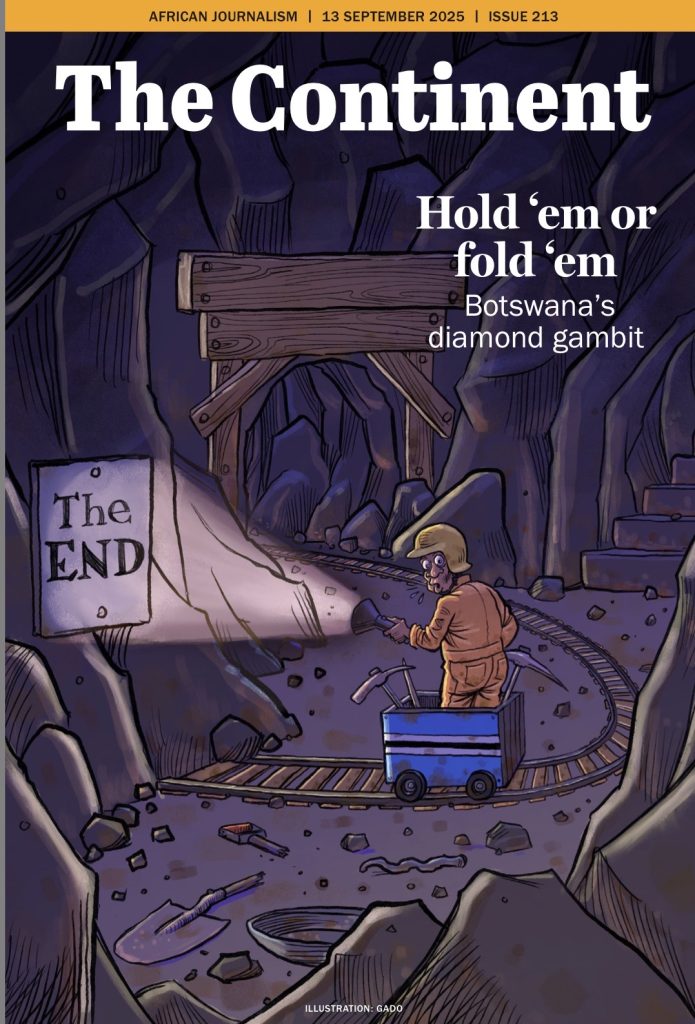
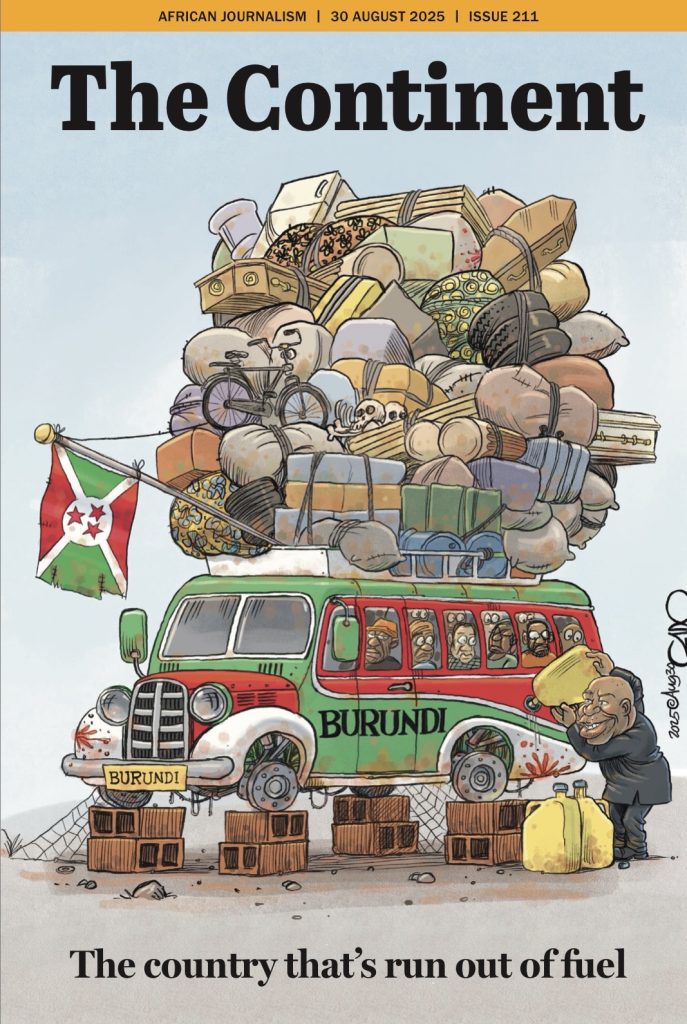
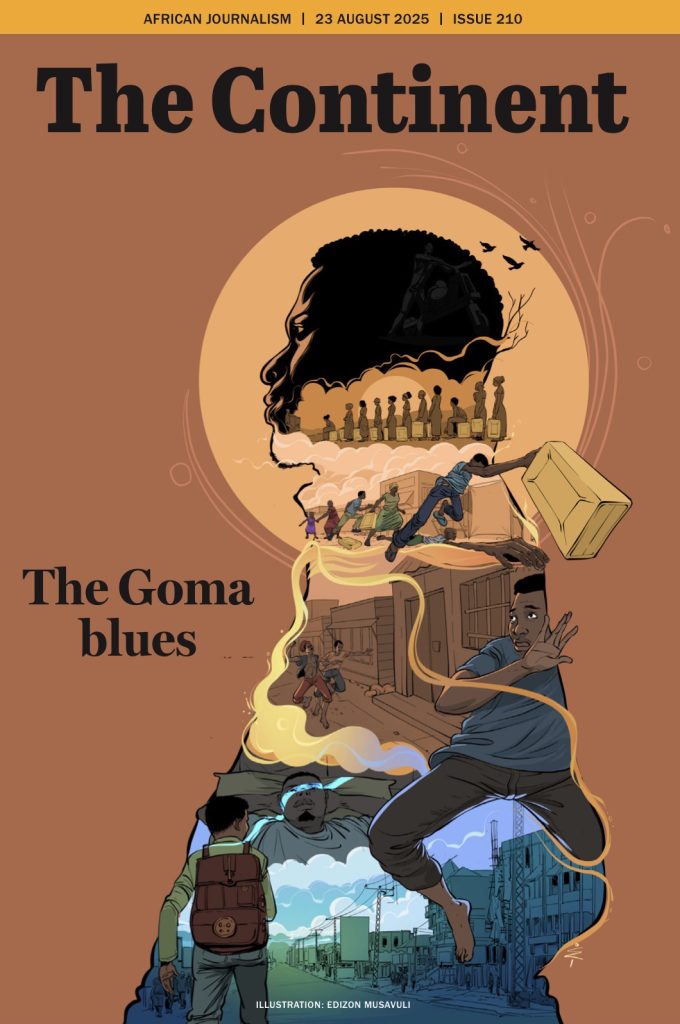
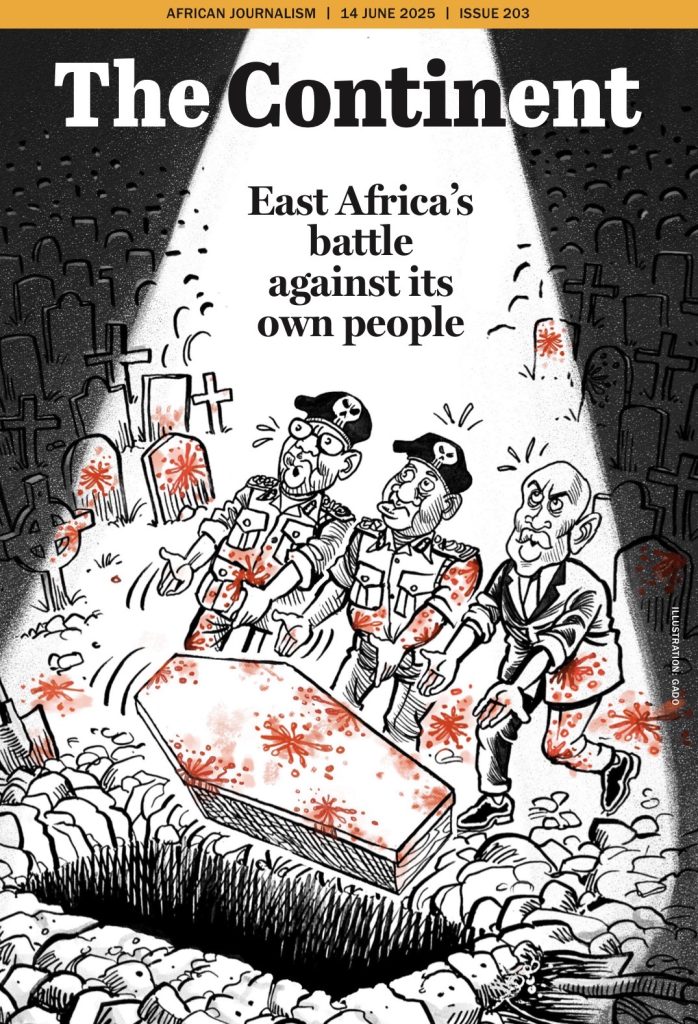
The newspaper template benefits from having a limited colour palette, apart from the traditional Black and White, we employ a statement Yellow-Orange colour in both The Continent and The Friday Paper to highlight specific areas of the paper. Keeping the colours relatively simple allows us to experiment with placement of images and illustrations without making a page feel very busy. Our fonts are not overly stylistic or decorative, so they complement our wide range of visuals well. We typically have well curated photos every week and often, we have beautiful illustrations. That is something our readers have noticed, praised us for and stated to be some of the most enjoyable parts of reading our newspaper. The idea is to create harmony between the text and visuals and have both tell a unified story.
To make good use of the small real estate, we pay particular attention to the size of photos and illustrations on a page. Wherever possible, we like to run a photo or illustration full-page usually to start a new section in the paper. Not only is it visually interesting for the readers and looks great on a phone, but it also creates a moment of pause and to get a sense of the story from the visuals before diving into the text. We place value in the power of images and illustrations to tell compelling stories, so we like to give them the space to do just that.
How do you balance journalistic depth with visual simplicity in a mobile layout?
Most journalism is too long. And online there are few original photographs, or illustrations. Website journalism has become about long slabs of text and not engaging people. The data from websites show this, with people reading an intro or a few paragraphs then dropping off. Our design helps ensure that we keep stories long, with no more than 300 words on a page. And that’s enough to make a really strong news story. The key there is in editing the journalism. The team then makes sure that the newspaper as a whole speaks to itself, and to that week, with the stories meeting the design and format. In our reader surveys, nearly half of readers say they read the newspaper from cover to cover.
How has the audience responded to this WhatsApp-based format?
The words subscribers use the most when describing The Continent are love, trust and fun. In our surveys, people consistently point to that mix of design, stories, illustrations, photos, format and distribution as one they really appreciate. That’s in part why we have been able to grow to 33,000 subscribers solely through word-of-mouth: people share The Continent because they want other people to read it and enjoy it.
Are there any patterns in how stories spread through forwarding and sharing?
The single newspaper means it is easy to share, anywhere. While one person might subscribe and get The Continent each week, they will then drop it in their church WhatsApp group, family chat, office Slack channel or send it to someone they want to impress. Our core readers share it with up to 10 groups and individuals each week. That gives us a readership of over 150,000 a week.
What are the biggest editorial challenges in distributing journalism through encrypted networks like WhatsApp?
The format and distribution channel don’t affect us editorially. Our goal is to empower people with quality journalism. The single newspaper means we can have people read from the same reality (rather than live in a curated bubble), and read things they otherwise might not come across. This is different from how journalism has been built in the last 15 years.
How do you verify reach and engagement without traditional analytics tools?
We know who subscribes to The Continent and now The Friday Paper. So we know about that first community. We also do in-depth surveys to build out what we know about the community, without extracting data or embedding cookies to track people. Our last survey had over 1,300 respondents. We’re strengthening those tools. And we have learned to be okay with not knowing what happens beyond that first network of readers – that data would be interesting but also our job is to get journalism to people and any bonus readers are a bonus.
The Continent has inspired many similar models worldwide. Do you collaborate or share insights with other publishers exploring messaging platforms?
Because we’re trying something new – or a new mix of existing things – we want to share and learn as much as possible. We’re only here because others shared with us. We want to pay that forward. And there’s no point in being a lone surviving newsroom if everyone else fails: the world needs more newsrooms and more journalism to meet this moment. Time means we don’t consult or sit down with newsrooms to do in-depth partnerships, but we talk about our learnings and informally talk with people who want to pick up bits of our learnings.
Have you noticed design or editorial innovations emerging from this community?
Yes. One of the things that really interests us is the different ways different cultures tell stories. In newspaper format this means some cultures will need longer stories, or different images, or for the page design to work a different way. This is where an AI translating your news and replicating it doesn’t work. You need people who get storytelling in a culture to tell those stories. Atar Magazine uses white space and illustrations really well and has us thinking how we invest more time and resources into doing the same. Egab, a newsroom that focuses on Arab-speaking countries, was inspired by our WhatsApp community to start asking for pitches through the platform, which in turn helps us think about using WhatsApp that way.
Do you see WhatsApp (or similar messaging apps) evolving into a mainstream platform for journalism?
Lots of newsrooms already use WhatsApp in different ways to engage with their readers. Where we’re starting to see steady innovation is in creating new news products for that platform, and its peers. The potential there is massive.
What changes would you like to see from WhatsApp itself to better support news media and design storytelling?
Big picture, I’d love to see WhatsApp become a public utility like Wikipedia or Signal. It is the world’s most important communication tool, and nobody should have control over that. On a practical level having Meta acknowledge that it is used to publish journalism would be a big step, especially if it acknowledges that this happens in the global south as well, rather than the inevitable focus on Western organisations when they see the light on WhatsApp.
Could this model be scaled or adapted for other languages, regions, or topics?
Quality curated news in a newspaper format is timeless. And we know readers want it. It’s great in countries where data is expensive (much of Africa), where algorithms aren’t built for local knowledge (Latin America), or where repressive governments are coming after publishers (everywhere).
Do you ever imagine a world where newsrooms publish exclusively on messaging platforms like WhatsApp?
Not exclusively. One of the mistakes we made with the digital first moment has been to surrender our core strengths to platforms. We need to think more about media products that we control – that take advantage of mass distribution tools to reach people, but don’t decide what we do and how we do it. That means using WhatsApp to empower people with your journalism but also reaching them through other platforms. And we can do that by custom building beautiful newspapers (or magazines etc) that make people want to read and engage with journalism. Those are then things people can share with anyone, anywhere.
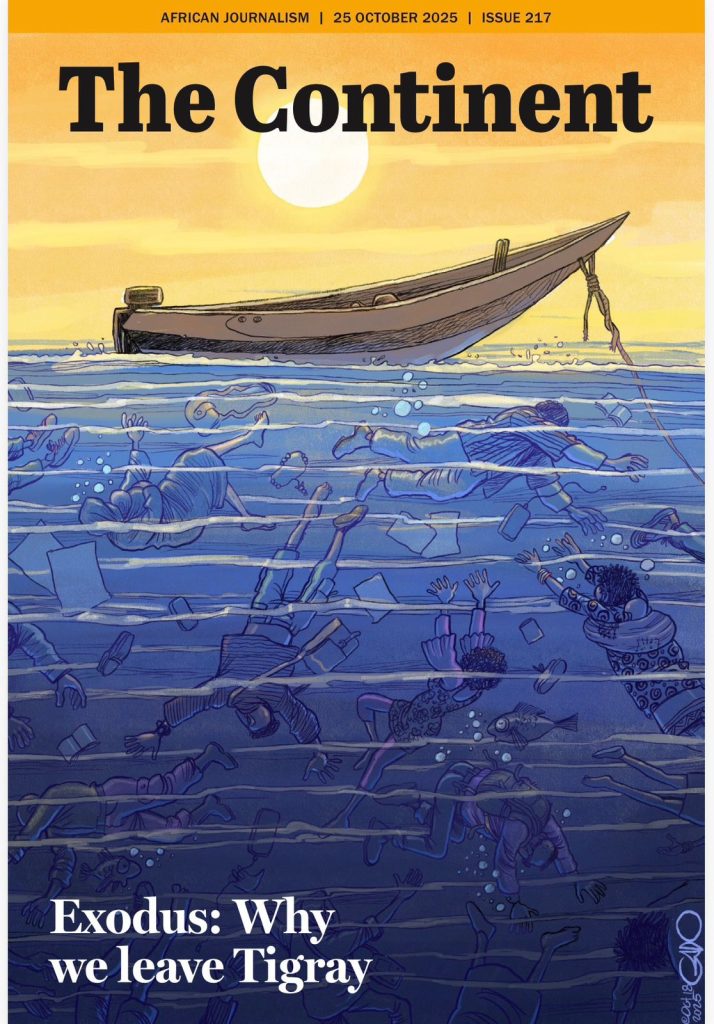
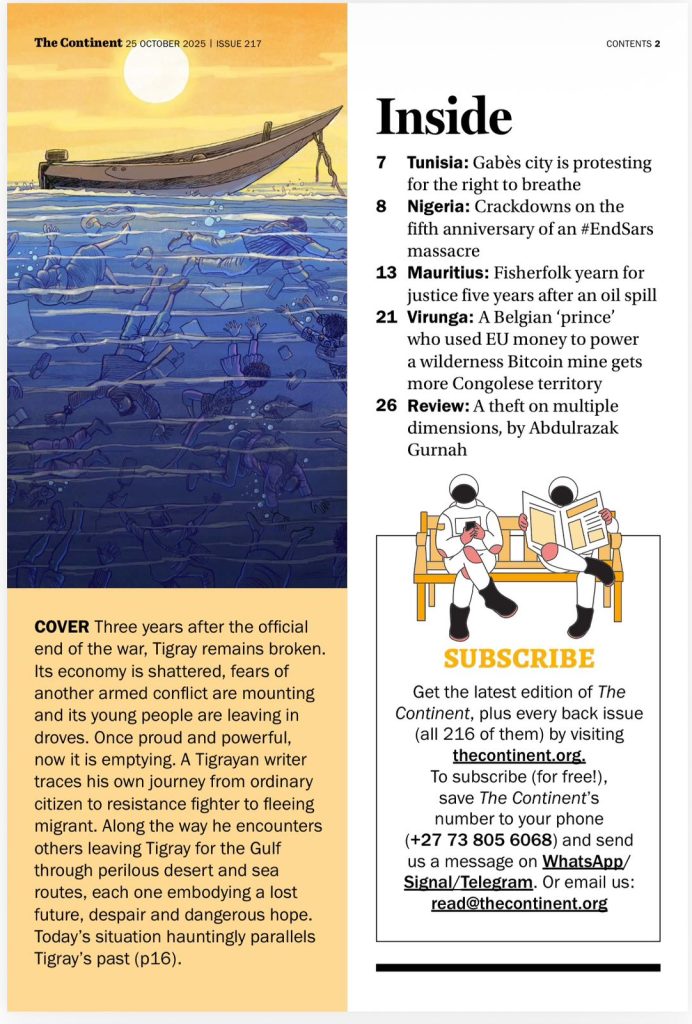
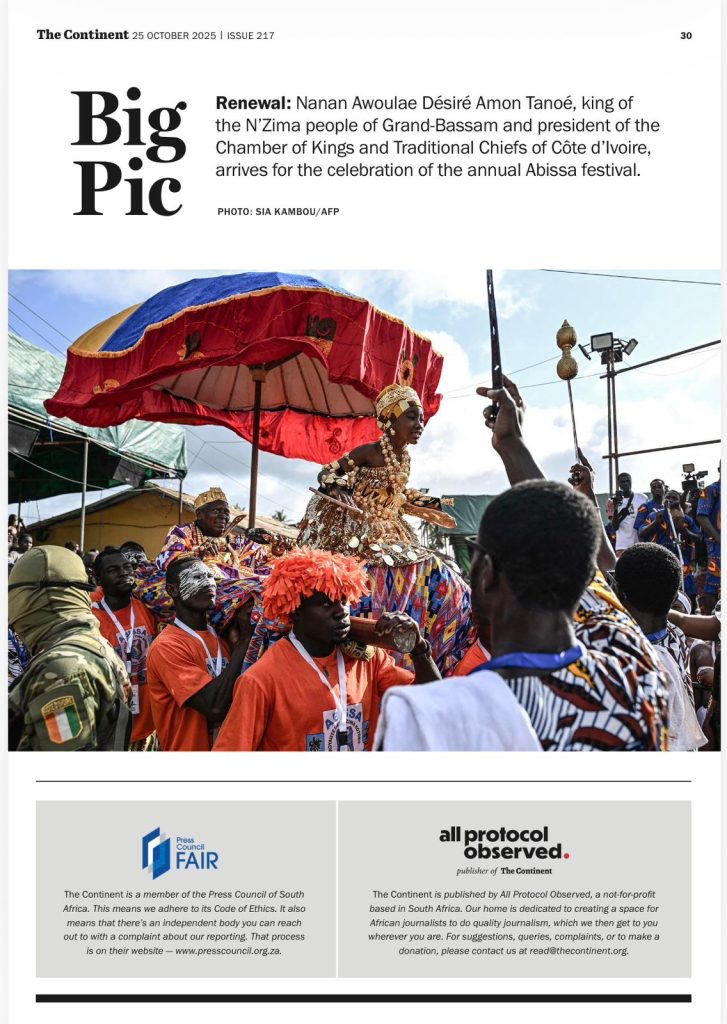
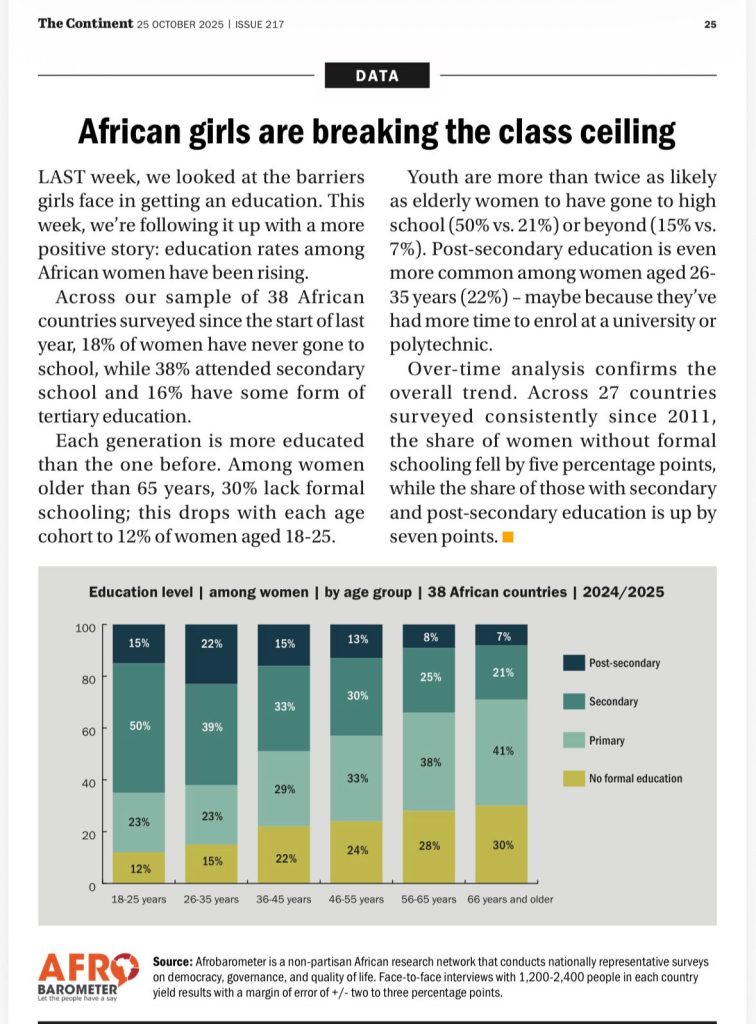
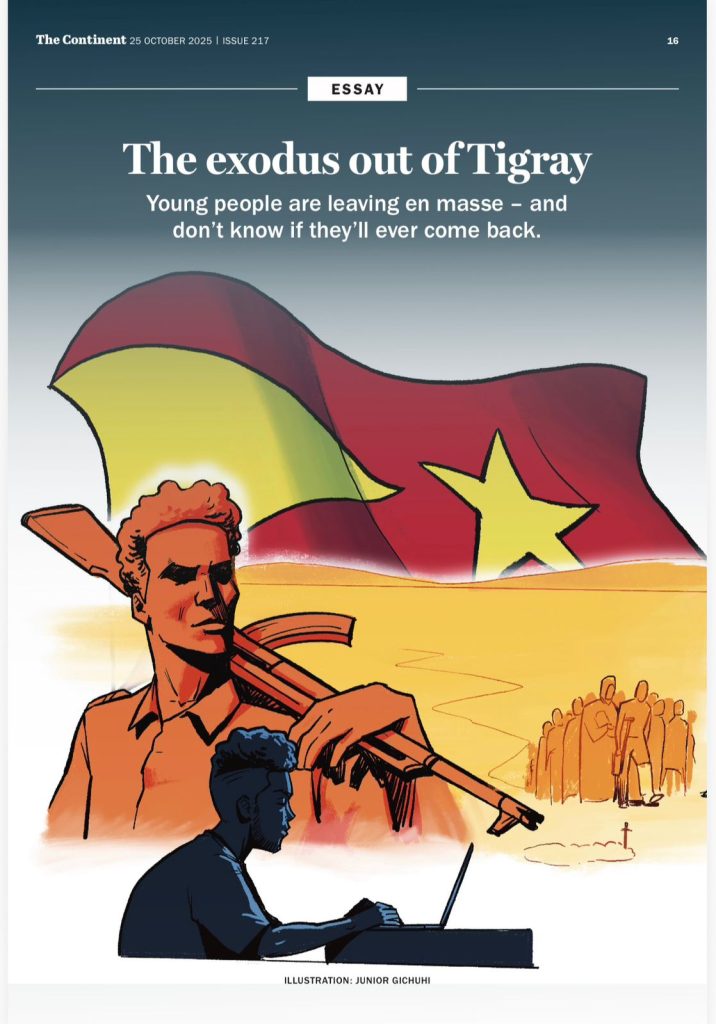
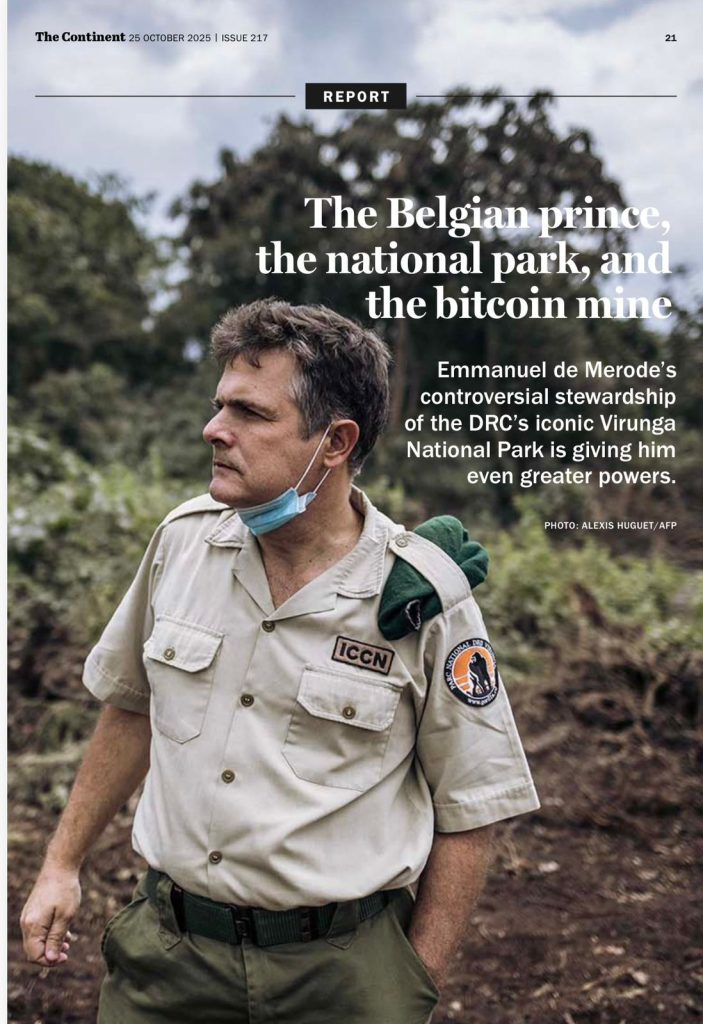
some pages from The Continent
What do you see as the biggest strengths of the WhatsApp newspaper model?
Answering this more generally on the bespoke PDF newspaper model, rather than on WhatsApp.
– At its best, journalism curates bits of the world and helps us know more about each other. Newspapers are a perfect format to lean into that strength.
– It is finite. There’s no endless scroll and when you finish a page or edition, you’re done.
– You can escape censorship and share it with anyone, anywhere.
– You are not reliant on platform algorithms, referrals or generative AI agents. People are recommending your newspaper to other people. Your network is then organic and resilient.
Do you believe messaging-based journalism could redefine what a “newspaper” means — from a printed layout to a shareable, mobile narrative?
I love newspapers. I’m not alone. This is an incredible way to inform, entertain, educate, challenge and empower people in a shared reality. Our industry tried to kill newspapers in the shift to websites, forgetting the strengths of that format. But 21st century technology isn’t the end of the newspapers; it’s a way for newspapers to be better and get to more people. Beautifully designed products that tell you a bit about the world and can be shared anywhere are a way to save our industry
How do you generate revenue for your publication? What are the possible revenue streams?
On the revenue, we are majority donor funded. This has allowed us to build The Continent for three years and prove that this is a different kind of way to do journalism, and one that readers want. We are now growing other revenue streams, like merchandise and events. The Friday Paper in South Africa will have advertising and we expect this to be a strong income stream. Outside of a few giant outlets, nobody has solved a sustainable model for quality, ethical news journalism and it is really hard out there. Just staying alive in this climate is an achievement.